
Most Denver homeowners researching energy efficiency upgrades know that Xcel Energy offers rebates for insulation. A smaller group knows about the $600 bonus that becomes available when you complete qualifying insulation or air sealing work before installing an Xcel-approved heat pump. This stacking scenario can push your total rebate package well past the individual maximums – and if the timing and sequencing are set up correctly, a combined insulation plus heat pump project can return more than $2,800 in total rebates before the Whole Home Efficiency multiplier is applied.
The mechanics of this bonus are worth understanding before you commit to any contractor for either the insulation or the HVAC side of the project. The sequence matters in a specific way, and getting it backward means permanently forfeiting the $600 – there’s no retroactive path once the heat pump is in the ground. This post explains how the bonus works, what qualifies on both the insulation side and the heat pump side, how the stacking math works, and why planning the project order early is the single most important step you can take.
For the full overview of every available rebate category, see our Xcel energy rebates Denver CO guide.
What Is the Xcel Heat Pump Insulation Bonus?
It’s a $600 flat bonus Xcel pays when qualifying insulation or air sealing is completed before a qualifying cold-climate heat pump is installed – both steps must happen within a two-year window, insulation first.
Xcel offers a $600 bonus rebate to homeowners who:
- Complete qualifying insulation work and/or air sealing through an enrolled Trade Ally contractor
- Subsequently install a qualifying cold-climate heat pump under Xcel’s equipment rebate program
- Complete both steps within a two-year window, with the insulation project finishing before the heat pump installation begins
The bonus exists because Xcel wants homes to be properly prepared before heat pump equipment goes in. A heat pump in a leaky, poorly insulated home runs longer cycles to maintain setpoint temperatures, uses more electricity per unit of heat delivered, and provides less consistent comfort throughout the home. When insulation and air sealing work precede the equipment installation, the heat pump operates closer to its rated efficiency from day one.
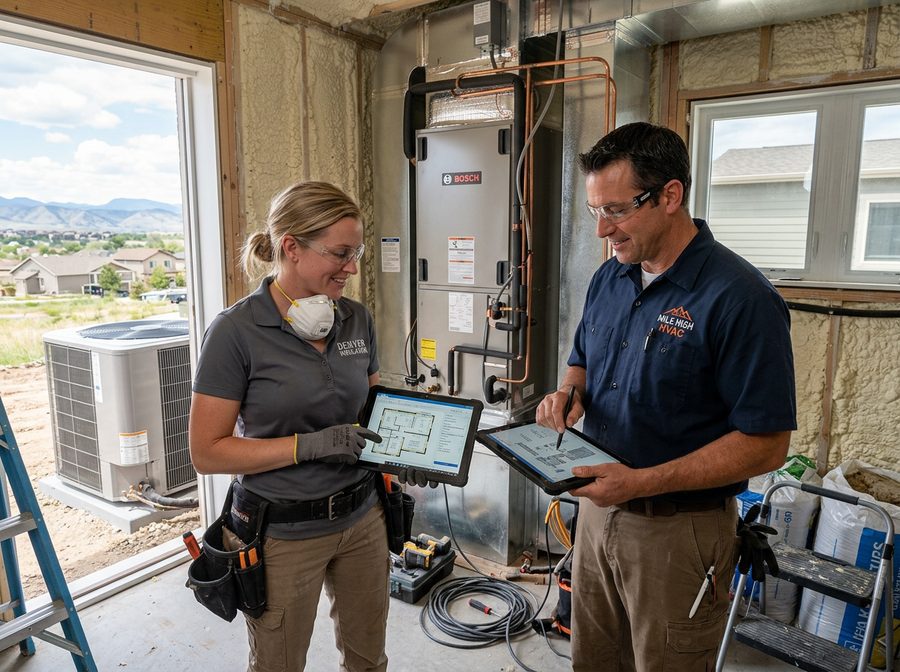
From the Field: The Bonus That Appeared Automatically
We had a homeowner in Lakewood who did attic insulation with us in March, then installed a heat pump in October. That $600 bonus rebate came through automatically when Xcel processed the heat pump application. She didn’t have to do anything – it just appeared on her account. She called us to ask what it was, genuinely surprised. The sequence worked exactly as it’s supposed to: insulation first, heat pump second, both within the two-year window, both through enrolled Trade Ally contractors. That’s the whole formula. The homeowner’s total rebate package for that calendar year was $1,250 (attic insulation) plus $1,000 (air sealing) plus $600 (heat pump bonus) – $2,850 before the Whole Home Efficiency multiplier applied.
Why Does the Sequencing Requirement Matter So Much?
Getting the order wrong means losing the $600 permanently – Xcel’s system cross-references project completion dates and there is no exception pathway once the heat pump is installed first.
The sequencing requirement for this bonus is strict and has no exception pathway. Insulation and air sealing must be completed before the heat pump is installed.
You cannot install the heat pump first and then come back to do the insulation work afterward, hoping to claim the bonus retroactively. Xcel’s system cross-references project completion dates when the bonus is evaluated, and the dates are explicit: insulation completion date must precede heat pump installation date. If the heat pump goes in first, the $600 bonus is gone – not deferred, not adjustable, gone.
The two-year window means:
- You have up to 24 months from the date your insulation/air sealing project is completed to install a qualifying heat pump and trigger the $600 bonus.
- If you’re planning both upgrades, doing the insulation first is always the right sequence – it also starts delivering energy savings immediately, not just when the heat pump arrives months later.
- If you’ve already scheduled a heat pump installation with an HVAC company and the install is happening soon, call us now. There may still be time to get the insulation done first if the schedule allows it.

What Counts as a Qualifying Heat Pump?
Not every heat pump model qualifies for the Xcel rebate program that triggers the $600 bonus. The equipment must meet specific program criteria:
- Cold-climate designation (CCHP): The heat pump must be rated to deliver efficient performance at low outdoor temperatures – typically down to 0°F or below. Denver’s elevation and winter conditions make this a meaningful requirement. Standard air-source heat pumps lose efficiency rapidly below 35°F; cold-climate models maintain useful output at temperatures that Denver regularly sees from December through February.
- Minimum efficiency ratings: The equipment must meet Xcel’s current HSPF2 (Heating Seasonal Performance Factor, version 2) and SEER2 specifications. These change with program year updates, so confirm with your HVAC contractor that the specific model they’re proposing is on Xcel’s current qualified equipment list.
- Installed by a program-enrolled HVAC contractor: Similar to insulation, the heat pump must be installed by a contractor enrolled in Xcel’s program. The insulation Trade Ally and the HVAC Trade Ally are often different companies – that’s fine. They each handle their respective side of the project submission.
Denver’s climate makes cold-climate certification worth paying attention to. A unit that’s efficient at 40°F but drops to resistance-heat mode at 25°F will cost significantly more to operate during the coldest weeks of the year than an actual cold-climate model. Your HVAC contractor should be able to confirm whether the equipment they’re proposing is CCHP-rated and Xcel-qualified before you sign anything.
How Does Xcel Pay the $600 Bonus?
Once the heat pump is installed and the heat pump rebate is submitted by your HVAC contractor, Xcel automatically checks the homeowner’s account for prior qualifying insulation or air sealing rebates within the two-year window. If the conditions are met, the $600 bonus is added to the heat pump rebate payment – you don’t fill out a separate bonus form.
This back-end cross-referencing is why the insulation project needs to have been properly submitted and accepted by Xcel before the heat pump goes in. If the insulation rebate application was incomplete, submitted late, or never processed, there may be no qualifying record for Xcel to find when they check. Another reason Trade Ally selection and documentation quality on the insulation side matters as much as it does.
How Does the Bonus Combine with the WHE Program?
The Whole Home Efficiency (WHE) program adds 25% on top of standard rebate amounts when a homeowner completes three or more qualifying measures within a two-year window. An attic insulation project, an air sealing project, and a qualifying heat pump installation represent three distinct qualifying measures – which means the WHE multiplier can apply to the insulation and air sealing rebates earned in the same project window.
The $600 heat pump bonus itself does not receive the WHE multiplier – it’s a flat bonus, not a standard rebate. But the attic insulation and air sealing rebates earned alongside the heat pump project do qualify for the 25% uplift.
Rebate Stacking Example: Total Value of a Full Project
| Measure | Standard Xcel Rebate | WHE 25% Add-On | Combined Total |
|---|---|---|---|
| Attic insulation (R-0 to R-60+, gas-heated home) | Up to $1,250 | +$312.50 | Up to $1,562.50 |
| Air sealing (20%+ CFM50 reduction verified) | Up to $1,000 | +$250.00 | Up to $1,250.00 |
| Heat pump insulation bonus (sequenced correctly) | $600 flat bonus | N/A – bonus is flat, not standard rebate | $600 |
| Total rebate value (with WHE, before heat pump equipment rebate) | Up to $3,412.50 |
The heat pump equipment rebate itself – paid on the HVAC side for the qualifying unit – is separate from all of the above. That rebate amount varies by equipment efficiency tier and is submitted by your HVAC contractor, not by Insulation Nation. The numbers in the table above are what Insulation Nation sets up and submits on the insulation side alone.
Does the Bonus Apply to Mini-Split Heat Pumps?
Ductless mini-split systems can qualify for Xcel’s heat pump rebate and can trigger the $600 bonus, but only when the specific model meets the cold-climate efficiency requirements. Many mini-splits sold in Denver do meet these specs. Some don’t – particularly lower-cost single-zone units that aren’t rated for cold-climate performance. Before committing to a mini-split installation, confirm the exact model your HVAC contractor is proposing is on Xcel’s current qualified products list.
If the mini-split doesn’t qualify for the Xcel heat pump rebate, the $600 bonus won’t trigger regardless of what insulation work was done beforehand. Equipment qualification on the HVAC side is a prerequisite for the bonus, not just a formality.
Can Wall Insulation Help You Reach WHE Territory?
If your Denver home has empty wall cavities – common in pre-1975 construction – adding wall insulation to the project scope is one way to reach three qualifying measures even before the heat pump counts as the third. Attic insulation plus air sealing plus wall insulation can all qualify under the standard rebate program, and that combination of three measures triggers the WHE 25% uplift independently of the heat pump timeline.
The wall insulation rebate is up to $875. With the WHE 25% bonus, that’s potentially $1,093.75 for that measure – before the heat pump project even begins. Read the full requirements and process in our whole home efficiency bonus guide, and see current rebate amounts across all measures in our 2026 Xcel rebate amounts guide.
Plan the Sequence Before You Make Any Calls
The $600 heat pump bonus is straightforward to capture when the project is planned in the right order. What makes homeowners miss it is moving too fast on the HVAC side without thinking about the insulation timing first.
If you’re thinking about a heat pump in the next one to two years, the right sequence is:
- Call Insulation Nation for a free home assessment
- Complete qualifying insulation and/or air sealing through us (we handle all rebate documentation)
- Call your HVAC company and schedule the heat pump installation
- Confirm the heat pump model qualifies for the Xcel rebate
- Heat pump is installed, HVAC contractor submits their rebate, $600 bonus triggers automatically
The insulation investment starts returning value the moment we complete the job – lower heating costs immediately, regardless of when the heat pump arrives. There’s no downside to doing it first.
Get the Sequence Right – Call Insulation Nation First
Insulation Nation handles the complete insulation side of this equation: free assessment, pre-job blower door testing, air sealing, blow-in installation, post-job testing, and full rebate submission. Visit our Xcel Energy rebates page to learn more about our process. We’ve completed more than 2,000 Denver-area projects with a 4.9/5 Google rating, BPI Certification, and BBB Accreditation.
Call (720) 410-9414 to schedule your free assessment. We’ll confirm what your home qualifies for, estimate the full rebate package including the heat pump bonus, and make sure every project step is set up in the right order to protect every dollar you’re owed.
Don’t schedule the heat pump before you talk to us. The order of operations matters and there’s no way to fix a sequence mistake after the fact. Call (720) 410-9414 and we’ll build the project plan that captures everything available.