
Short answer: yes. If you want to collect an Xcel Energy rebate on insulation or air sealing work, the installation must be done by an enrolled Trade Ally contractor. DIY work does not qualify, no matter how well the job is done, what materials you use, or how closely you follow the program guidelines. That’s not a rumor or a gray area. It’s a written requirement in Xcel’s Home Efficiency Rebates program, and there is no pathway around it.
This post explains what Trade Ally status means, what happens if you use the wrong contractor, and exactly what a qualifying contractor must document to get your rebate approved. If you’ve already started shopping around, check our Xcel rebate eligibility guide for a full breakdown of who qualifies. And for the most complete overview of what’s available, see the Xcel energy rebates Denver CO guide.
What Is an Xcel Energy Trade Ally Contractor?
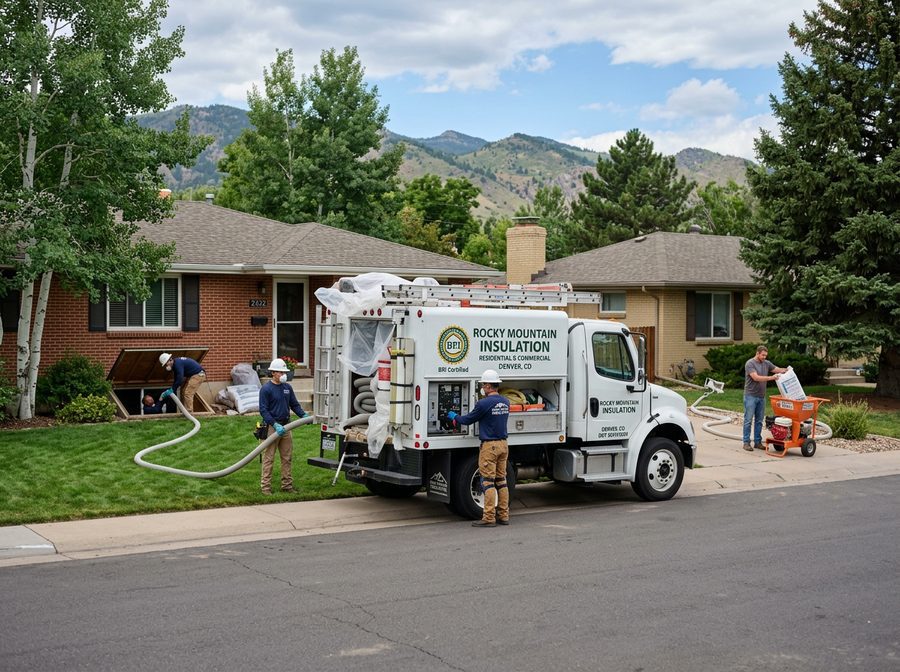
A Trade Ally is a contractor enrolled directly in Xcel’s program – not just licensed, not just experienced, but specifically approved by Xcel and actively maintained in their system. Xcel Energy maintains a network of pre-approved contractors called Trade Allies. To earn that status, a contractor must apply through Xcel’s program, agree to follow program standards, carry appropriate licensing and insurance, and complete required training on program rules and documentation requirements.
Trade Ally enrollment isn’t permanent. Contractors must stay current with Xcel’s requirements each program year. If a contractor lets enrollment lapse, work done during that gap won’t qualify for rebates, even if the company has been a Trade Ally for years in the past. Before you sign any contract, confirm the contractor is currently enrolled – not just that they were enrolled at some point in the past.
Insulation Nation is an Authorized Xcel Energy Trade Ally. Owner Josh maintains current program enrollment year over year, which means every job we complete is eligible for rebate processing from the first day of work. We can show you our Trade Ally credentials before you make any commitment. Being BPI-certified also means we’re trained to run the pre and post documentation Xcel requires – not estimated, not approximated from memory.
Why Does DIY Insulation Disqualify You from the Xcel Rebate?
DIY installation fails rebate qualification because the program requires a verified, third-party documentation chain that simply doesn’t exist when a homeowner does their own work.
Xcel’s rebate program is built around verified results. The program requires third-party documentation at every step: pre-job measurements, post-job measurements, test results, and contractor invoices. When a homeowner does their own insulation or air sealing work, none of that documentation chain exists.
Here’s what the program actually requires before a rebate gets paid:
- Pre-job measurements of existing conditions (R-value readings or baseline blower door test results)
- Post-job measurements confirming the work hit the required performance thresholds
- A detailed, itemized invoice from a licensed contractor showing materials, scope, and square footage
- Documentation proving the contractor was enrolled as an active Trade Ally at the time of installation
- Blower door test results conducted at the right stages (required for air sealing and attic insulation rebates)
A homeowner doing their own attic insulation can’t submit a contractor invoice, because there is no contractor. Xcel has no way to verify the pre and post measurements were taken correctly, the right materials were installed to the required depth, or the job met program specifications. The application gets denied at the first review, and there is no appeal pathway for DIY work.
What Happens When You Use a Non-Enrolled Contractor?
A non-enrolled contractor means a permanently lost rebate. Once the work is done and the walls or attic are sealed up, there is no retroactive path.
This is the scenario that catches a lot of Denver homeowners off guard. They get a quote from a local insulation company that seems completely reputable – licensed, insured, experienced, good reviews on Google – but that company isn’t enrolled in Xcel’s Trade Ally network. The homeowner moves forward assuming they can submit for the rebate afterward. The job gets done, and then they find out the rebate can’t be processed.
This isn’t hypothetical. It happens regularly, and it’s expensive when it does. The consequences are real and permanent:
- Rebate denied: Xcel will not pay rebates for work done by non-enrolled contractors. There is no exception for high-quality work or good-faith mistakes.
- No retroactive enrollment: The contractor cannot enroll in the program after the fact and have prior work count retroactively. Enrollment must be active on the date of installation.
- Work can’t be redone for rebate purposes: Once insulation is blown into an attic or dense-packed into wall cavities, there is no practical way to undo it and have a Trade Ally redo the job just to qualify. The rebate opportunity is gone permanently.
- Lost rebate value: On a typical Denver attic and air sealing project, using a non-enrolled contractor costs you $1,250 to $2,250 in foregone rebates, plus the project cost you already paid.
From the Field: What Happens When the Wrong Contractor Does the Work
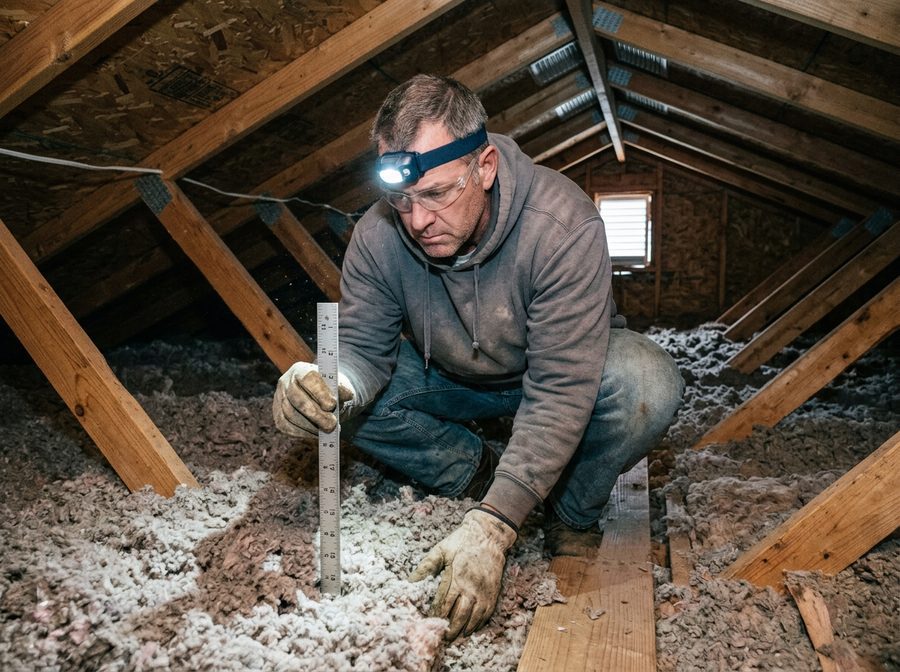
We get calls every few weeks from homeowners who hired a general contractor to do the insulation work. No blower door test, no pre-job documentation, no Trade Ally enrollment. Xcel denied every one of those rebates. The homeowner is out thousands of dollars and has to start over. In some cases the attic is already filled and there’s nothing to be done about the rebate – it’s gone. We walk through the assessment anyway to see what else the home might qualify for, but the original project is a write-off. This is the most preventable outcome we see, and it happens simply because the homeowner didn’t ask the right question before signing the contract.
DIY vs. Trade Ally Contractor: Side-by-Side
| Factor | DIY Installation | Xcel Trade Ally Contractor |
|---|---|---|
| Qualifies for Xcel rebate | No | Yes |
| Pre/post measurements documented | No | Yes, required for rebate submission |
| Blower door test performed | No | Yes, included as part of the rebate process |
| Contractor invoice provided | No | Yes, required for every application |
| Rebate paperwork handled | N/A | Yes, Insulation Nation handles 100% of it |
| Average rebate received | $0 | $1,600 average, up to $2,250 |
| Risk of denial due to enrollment | 100% | Zero – Trade Ally status confirmed before work begins |
| Pre-approval handled | N/A | Yes, we manage Xcel pre-approval requirements |
What Must a Trade Ally Contractor Document for Each Rebate Type?
Xcel’s program requires a specific documentation package for each rebate application. This is where a lot of rebates go sideways even when the work itself is solid – the job qualifies on paper, but the paperwork is incomplete, the measurements were taken at the wrong time, or the invoice format doesn’t match program requirements. Here’s what a complete submission must include:
For Attic Insulation Rebates
- Pre-installation R-value measurement confirming the attic was at R-24 or below before work started
- Post-installation R-value confirming the project reached R-60 or higher
- Pre- and post-blower door test results demonstrating air leakage reduction alongside the insulation
- Itemized invoice showing materials used, square footage covered, and project scope
- Contractor’s current Trade Ally ID number and enrollment verification
For Air Sealing Rebates
- Pre-job blower door test establishing the baseline CFM50 reading
- Post-job blower door test confirming at least a 20% reduction in CFM50
- Itemized invoice for air sealing work performed
- Contractor’s current Trade Ally ID number
For Wall Insulation Rebates
- Documentation verifying wall cavities were completely empty before installation (thermal imaging records and/or probe documentation)
- Post-installation documentation confirming R-13 or higher was achieved throughout
- Itemized invoice for materials and labor
- Contractor’s current Trade Ally ID number
Insulation Nation handles all of this documentation in-house. We conduct the pre-job assessment, perform blower door tests at both required stages, take R-value measurements before and after, and compile the complete rebate application for Xcel. You fill out zero forms – not one. The check comes to you directly from Xcel after they process our submission.
How Do You Verify a Contractor Is a Current Trade Ally?
Ask two direct questions before signing any contract: “Are you currently enrolled as an Xcel Energy Trade Ally?” and “Will you handle the complete rebate paperwork submission?” If the answer to either question is vague, hedged, or answered with “we can help you with that after the job,” treat it as a warning sign.
You can also verify Trade Ally status independently through Xcel’s website – they maintain a searchable directory of currently enrolled contractors. Insulation Nation is listed there, and our Trade Ally status is active for the current program year. We’re happy to provide our Trade Ally ID upfront, before any commitment is made.
One more check worth doing: ask whether the contractor performs blower door testing in-house. Many insulation companies outsource this or skip it for projects where it’s listed as optional. For rebate purposes, it’s not optional – missing the test means the rebate application fails. We perform blower door testing as a standard part of every project that requires it.
Why Our Rebate Success Rate Is High
We’ve processed rebate applications for more than 2,000 Denver-area homes since Insulation Nation started. In that time, we’ve seen exactly what causes rebates to get delayed or denied: missing documentation, blower door tests conducted after submission deadlines, pre-job measurements that weren’t recorded before work started, invoices that use language Xcel’s reviewers flag as incomplete, and contractors who lost Trade Ally status mid-project.
Our process is built around getting the paperwork right the first time. We document everything before work starts, perform all required testing at the right stages, and submit complete applications that don’t come back for corrections. Our 4.9/5 Google rating reflects the full experience – not just the installation quality, but the outcome of the rebate process from start to check in hand.
For more on how we handle the rebate process end to end, visit our Xcel Energy rebates page. To schedule a free assessment and get the process started, use our contact page.
Get Your Xcel Rebate Done Right
If you’re planning an insulation or air sealing project and want to make sure the Xcel rebate goes through without a problem, call us before you schedule anything. We’ll verify your home qualifies, walk you through the expected rebate amounts for your specific situation, and set up the pre-job assessment at no charge.
Want to compare how this process works before and after? Read our step-by-step guide to applying for Xcel rebates in Denver – it walks through the full timeline from assessment to check.
Call (720) 410-9414 – we serve Denver and 40+ communities across the Front Range. BBB Accredited, BPI Certified, and an Authorized Xcel Energy Trade Ally.
Don’t leave $1,600 or more on the table by working with a contractor who isn’t enrolled or who can’t handle the paperwork. One call to (720) 410-9414 puts you with a verified Trade Ally who handles every step from measurement to rebate check.