Crawl spaces & floors

Crawl space encapsulation vs. a vapor barrier in Denver

Cold floors and a musty smell don't always mean a full encapsulation. Here's what Denver crawl spaces usually need, and in what order.

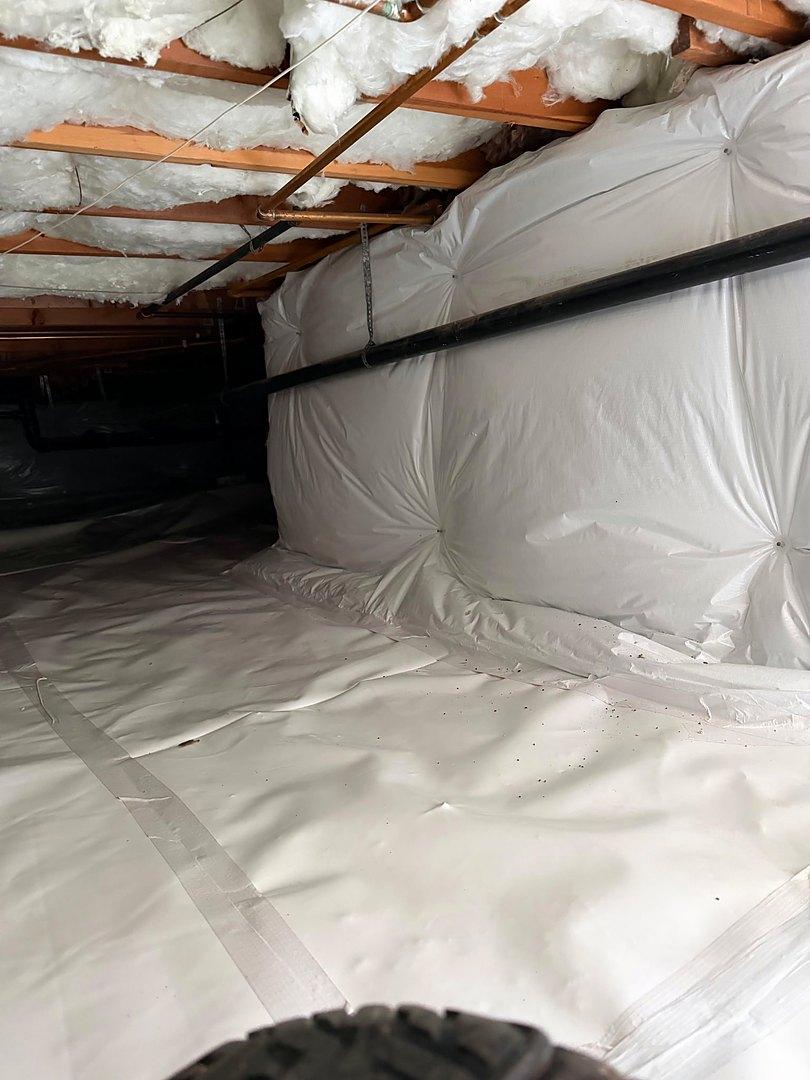
White vapor barrier lining a crawl space floor and walls under insulated floor joists
In this guide 7 sections
  1. What a vapor barrier does
  2. What encapsulation adds
  3. Why Denver crawl spaces are different
  4. Signs your crawl space needs attention
  5. The order to fix things in
  6. Floor insulation or wall insulation?
  7. What we do in crawl spaces

Do I need crawl space encapsulation or just a vapor barrier?

Many Denver crawl spaces do well with a sealed vapor barrier on the ground, rim joists sealed and insulated, and the floor above insulated where it's needed. Full encapsulation, which adds a heavier liner up the walls, sealed vents and humidity control, makes sense when there's standing water, persistent damp, or the crawl space holds ducts or a furnace.

  • Vapor barrier: a liner over the dirt floor that keeps ground moisture out of the air.
  • Encapsulation: liner on the floor and walls, seams taped, vents sealed, humidity managed.
  • Fix water first: grading, gutters and drainage come before any liner.
  • In Colorado, test for radon and coordinate the liner with any mitigation system.

What a vapor barrier does

Bare soil gives off water vapor all the time, even in a dry climate like ours. In a crawl space, that vapor rises into the air under your floor, raises the humidity and can make wood framing and insulation damp. Over time it shows up as a musty smell in the house.

A vapor barrier is a plastic liner laid over the ground. Done well, the seams overlap and are taped, and the edges run up the foundation walls a bit. It stops most ground moisture from getting into the crawl space air, and it gives you a clean surface to crawl on.
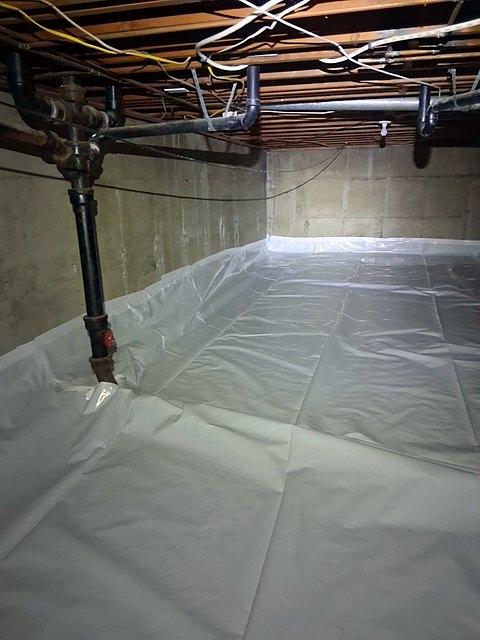
Crawl space walls and floor covered with a sealed liner

What encapsulation adds

  • A heavier, tear-resistant liner, often reinforced, covering the floor and running up the foundation walls.
  • All seams taped and the liner fastened and sealed to the walls and piers.
  • Crawl space vents and other openings sealed, so outdoor air stops flowing through.
  • Rim joists sealed and the foundation walls insulated, so the crawl space becomes part of the home's conditioned space.
  • A way to control humidity: a small amount of conditioned air from the HVAC system or a dehumidifier.

Why Denver crawl spaces are different

Most of the advice online about encapsulation comes from humid parts of the country, where summer air is full of moisture and vented crawl spaces grow mold. The Front Range is much drier, so many Denver crawl spaces don't have that problem.

What we do see here: cold floors in winter, drafts coming up around plumbing and wiring, rim joists with no insulation, old or torn vapor barriers, and the odd crawl space that gets wet after heavy rain or snowmelt. The fix matches the problem. A cold floor is mostly about air sealing and insulation. A damp crawl space starts with water management.

Radon also matters here. Colorado has high radon levels in many homes, and a crawl space liner can be part of a radon mitigation system. If you've tested high, or have a mitigation fan already, the liner has to work with it, not against it.

Signs your crawl space needs attention

  • Floors above the crawl space feel cold in winter.
  • A musty or earthy smell in the rooms over the crawl space.
  • Torn, missing or bunched-up plastic on the crawl space floor.
  • Condensation, rust or water stains on pipes, ducts or framing.
  • Batts hanging down or fallen from between the floor joists.
  • Standing water or wet soil after storms.

The order to fix things in

  1. Water first. Check grading, gutters and downspouts, and any drainage issues. No liner fixes running water.
  2. Air sealing. Seal the rim joists and the holes where pipes, wires and ducts pass through the floor.
  3. Ground cover. Install a sealed vapor barrier, or a full encapsulation liner if the space calls for it.
  4. Insulation. Insulate the rim joists and either the floor above or the foundation walls, depending on the approach.
  5. Humidity. If the crawl space is sealed up, give it a way to stay dry.

Floor insulation or wall insulation?

There are two ways to insulate a crawl space. One keeps the crawl space vented and insulates the floor above it, with batts held tight to the subfloor. The other seals the crawl space and insulates the foundation walls instead, bringing the space inside the home's thermal envelope.

If your ducts, water lines or furnace are in the crawl space, sealing it and insulating the walls usually works better, because those pipes and ducts stay warm. If the crawl space is empty and you just want warmer floors, a good vapor barrier, sealed rim joists and floor insulation is often enough.

What we do in crawl spaces

We install vapor barriers, seal and insulate rim joists, and insulate floors over unheated space. At the estimate we look at moisture, framing, ducts, existing insulation and access, and tell you what we'd do first.

If the space needs drainage work, a full encapsulation system with a dehumidifier or a radon system, we'll tell you plainly. You'll know what's needed before you spend anything.

Questions we hear

How much does crawl space encapsulation cost in Denver?

Cost depends on square footage, wall height, liner thickness, whether vents need sealing, and whether you need a dehumidifier or drainage work. A sealed vapor barrier with rim-joist work costs much less than full encapsulation. We give you a fixed written price after we see the space.

Is crawl space encapsulation worth it in Colorado?

It is when there's real moisture, ducts or equipment in the crawl space, or you want the space inside the home's thermal envelope. For a dry, empty crawl space under a cold floor, a sealed vapor barrier plus rim-joist sealing and insulation often solves the comfort problem for less.

How thick should a crawl space vapor barrier be?

Thicker liners resist tears and hold up better if you store things or crawl in the space often. Basic vapor barriers are thinner polyethylene; encapsulation liners are heavier and often reinforced. More important than thickness: overlapped, taped seams and edges sealed to the walls.

Does a vapor barrier help with radon?

A sealed liner can be part of a radon mitigation system, but a liner alone isn't radon mitigation. Test your home first. If you have or need a mitigation system, the liner should be installed to work with it.

Do Xcel rebates cover crawl space work?

Xcel's standard insulation rebates focus on attic insulation, wall insulation and air sealing measured by a blower door test. Sealing crawl space air leaks can count toward the whole-house air sealing result. Income-qualified programs may cover more. Ask us at the estimate and we'll tell you what applies.

Why are my floors cold over the crawl space?

Usually it's cold air moving through the crawl space and up around pipes and wires, uninsulated rim joists, and floor insulation that has fallen or was never installed. Our cold floors guide walks through the fixes.

Sources we checked

Rebate figures checked against Xcel Energy on November 25, 2026. Programs change, so we confirm what applies to your home at the estimate.

Josh Monroe, owner of Insulation Nation, in a company polo

Written by the Insulation Nation team

Josh Monroe's crew insulates and air seals Denver-area homes from our shop at 4665 W Warren Ave. We're BPI certified and an Xcel Energy participating contractor, so we run the tests and file the rebates we write about. Last updated November 25, 2026.

About usCurrent rebatesFAQ

From Google reviews
Dustin came out and verified the amount of insulation I currently had: R13 and current regulation state. It should be R60. He was able to send a crew out a few days later, and they were so polite, friendly, completed the job quickly and left no mess behind. I am absolutely thrilled that the back 1/3 of my home is actually warm now! Those rooms were about 15° cooler than the rest of my home.
Patty D.Feb 2026 · Google review
I found Insulation Nation through Xcel's energy audit program. Josh was responsive to my requests and used my audit report to write an estimate for the work to make my upstairs temperature more closely aligned with the main floor. On the scheduled work day, I received a text letting me know the crew was en route and they arrived exactly on time! They were very respectful of me and my home.
Marlisa W.Aug 2026 · Google review
Insulation Nation came to our home, tested the house's weather sealing, then went into the attic and performed repairs to the shoddy insulation there, blew in a thick layer of fiberglass, and repeated the pressure test with excellent results. They then worked to remedy a sealing deficit in the basement utility room that had also been identified during our Excel energy audit.
Elizabeth M.Oct 2026 · Google review
Free estimate

Let's find the cause in your house.

We'll test, look and tell you what we'd fix first.

Step 1 of 3

Get my free estimate

What are you noticing?
Where should we look? Optional — pick any

Free, no-pressure visit. We use your details only to schedule your estimate. Prefer to talk? (720) 410-9414