How a blower door test works
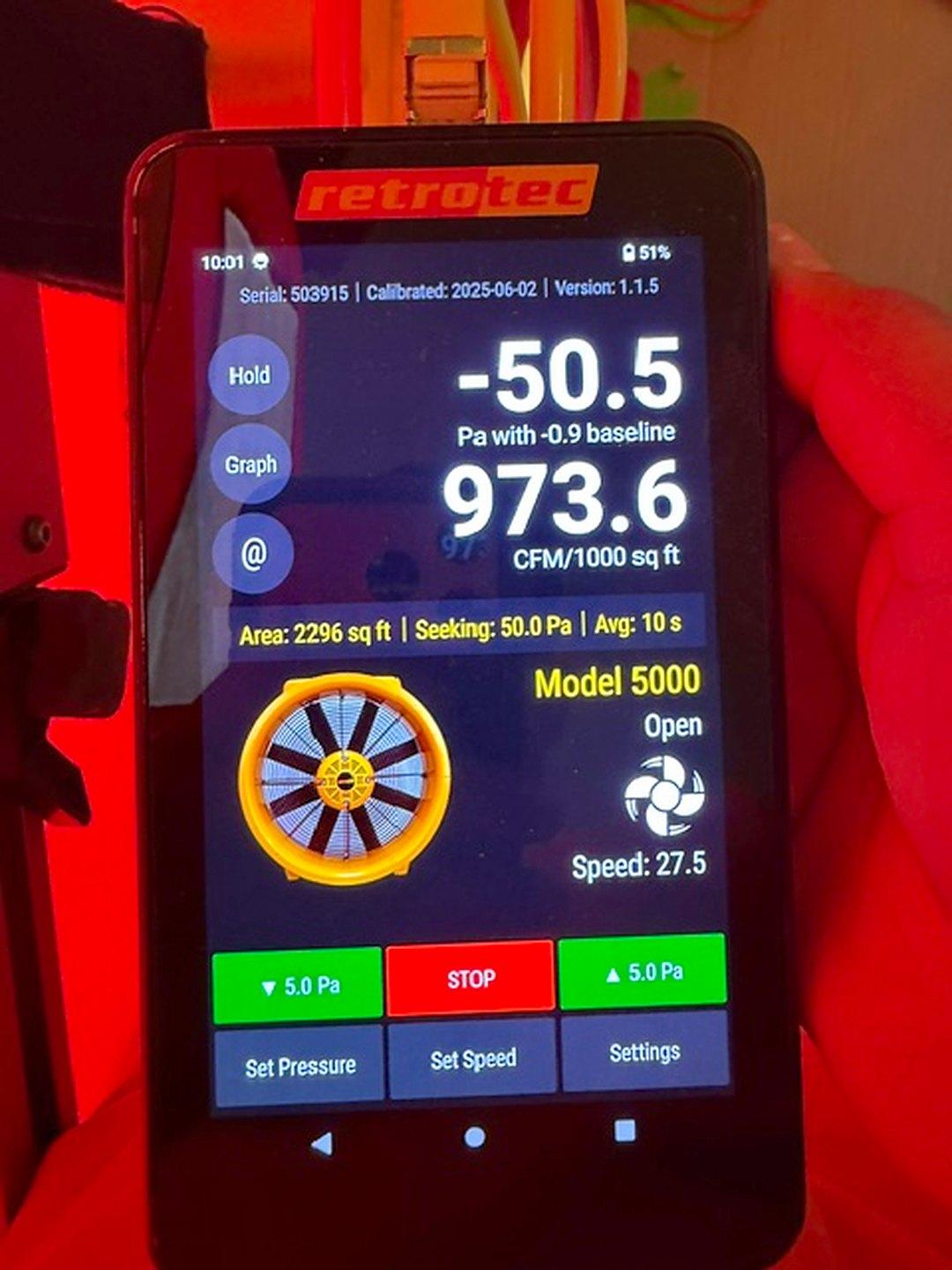
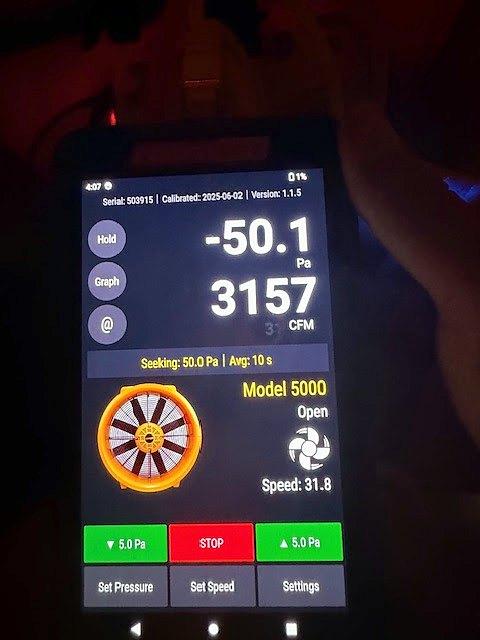
We close windows and exterior doors, open interior doors, and set the fan into a frame that fits the front or back door. The fan pulls air out of the house, so outside air leaks in through every gap. A gauge reads the pressure difference and the airflow through the fan.
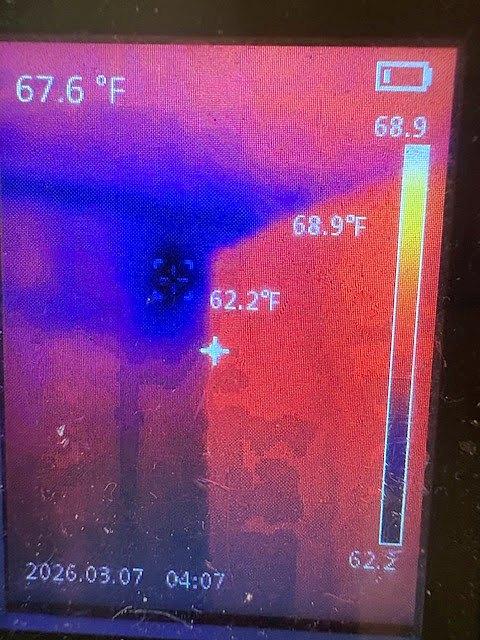
At 50 pascals, roughly what a strong wind pushes against a house, the airflow through the fan equals the air leaking in through all the cracks. That's your CFM50. While the fan runs, the leaks are easier to find by feel, with smoke, or with a thermal camera.
A test takes under an hour. You can stay home, and nothing is drilled or opened up.
What the numbers mean
- CFM50 is total leakage. A bigger house will usually have a bigger number, so compare your before and after numbers rather than your neighbor's.
- ACH50 is air changes per hour at 50 pascals: CFM50 × 60, divided by the house's volume in cubic feet. It lets you compare houses of different sizes.
- Older Denver homes often test much leakier than new construction, which is built to tighter energy codes.
- For the Xcel rebate, the target is simple: the after number has to be at least 20% lower than the before number. A 3,000 CFM50 house needs to reach 2,400 or less.
Blower door test vs. a full home energy audit
A blower door test answers one question: how leaky is the house? A home energy audit looks at the whole picture. That usually includes the blower door test, a look at insulation levels in the attic and walls, the heating and cooling equipment, combustion safety checks on gas appliances, and often a thermal camera scan.
Xcel offers rebates on audits done by registered auditors. Its 2025–2026 rebate summary lists 60% of the cost back, up to $100 for a standard audit, $160 for a blower door audit and $200 for an infrared audit. Xcel's Home Energy Squad also offers in-home visits. An audit is also the first step in Xcel's Whole Home Efficiency program, which adds a 25% bonus on standard rebates when you complete three or more measures within two years.
Do you need a full audit before insulation?
Not for Xcel's standard insulation and air sealing rebates. As an Xcel participating contractor, we run the blower door tests and attic measurements the rebate requires as part of the job, and we file the paperwork.
A full audit is worth it if you want an independent view of the whole house, if you're planning several upgrades such as a heat pump, or if you want the Whole Home Efficiency bonus. If you've already had an audit, send it to us and we'll build the estimate around it.
What we test and check at an estimate
- Attic insulation depth and type, measured in several spots.
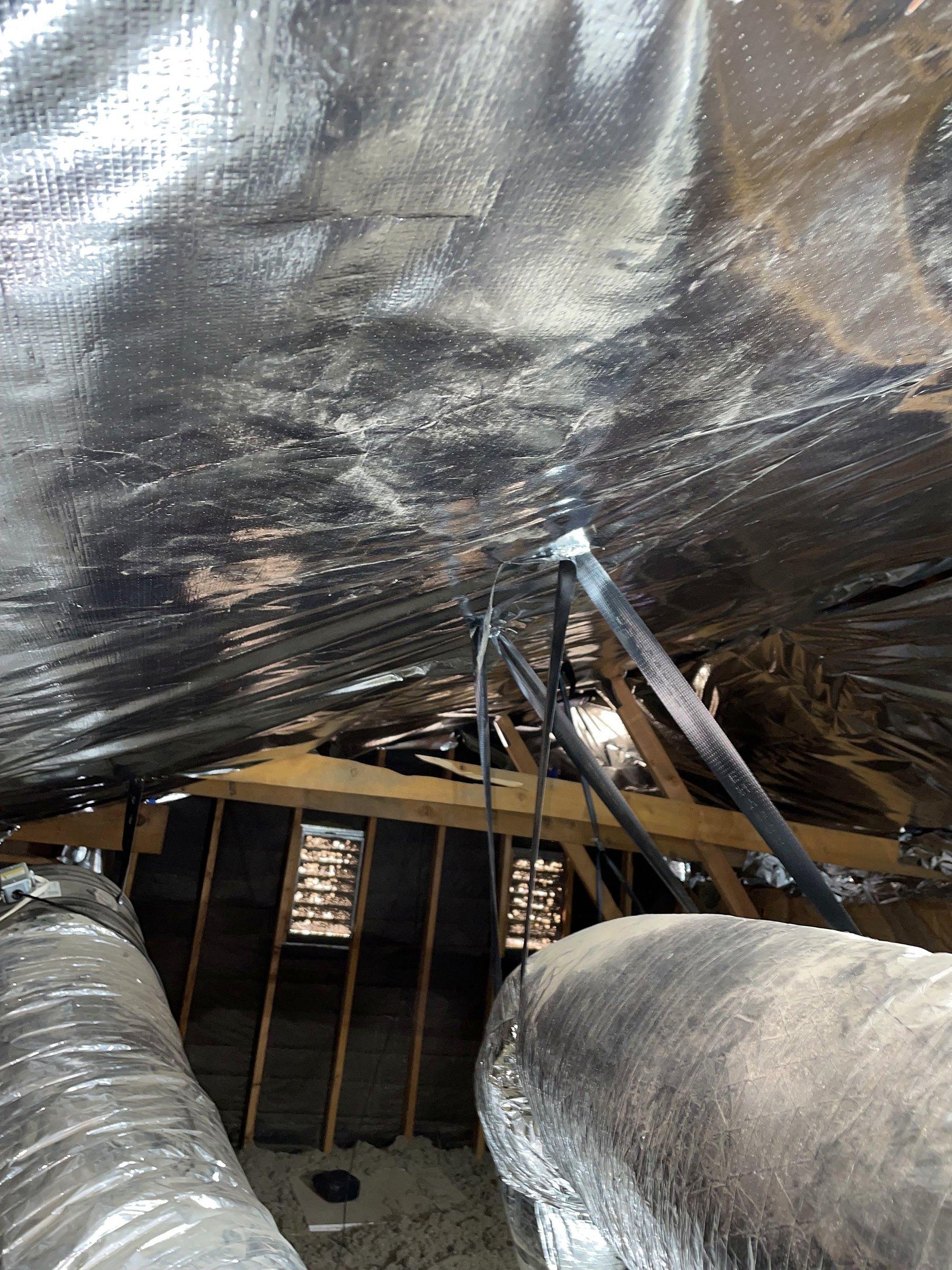
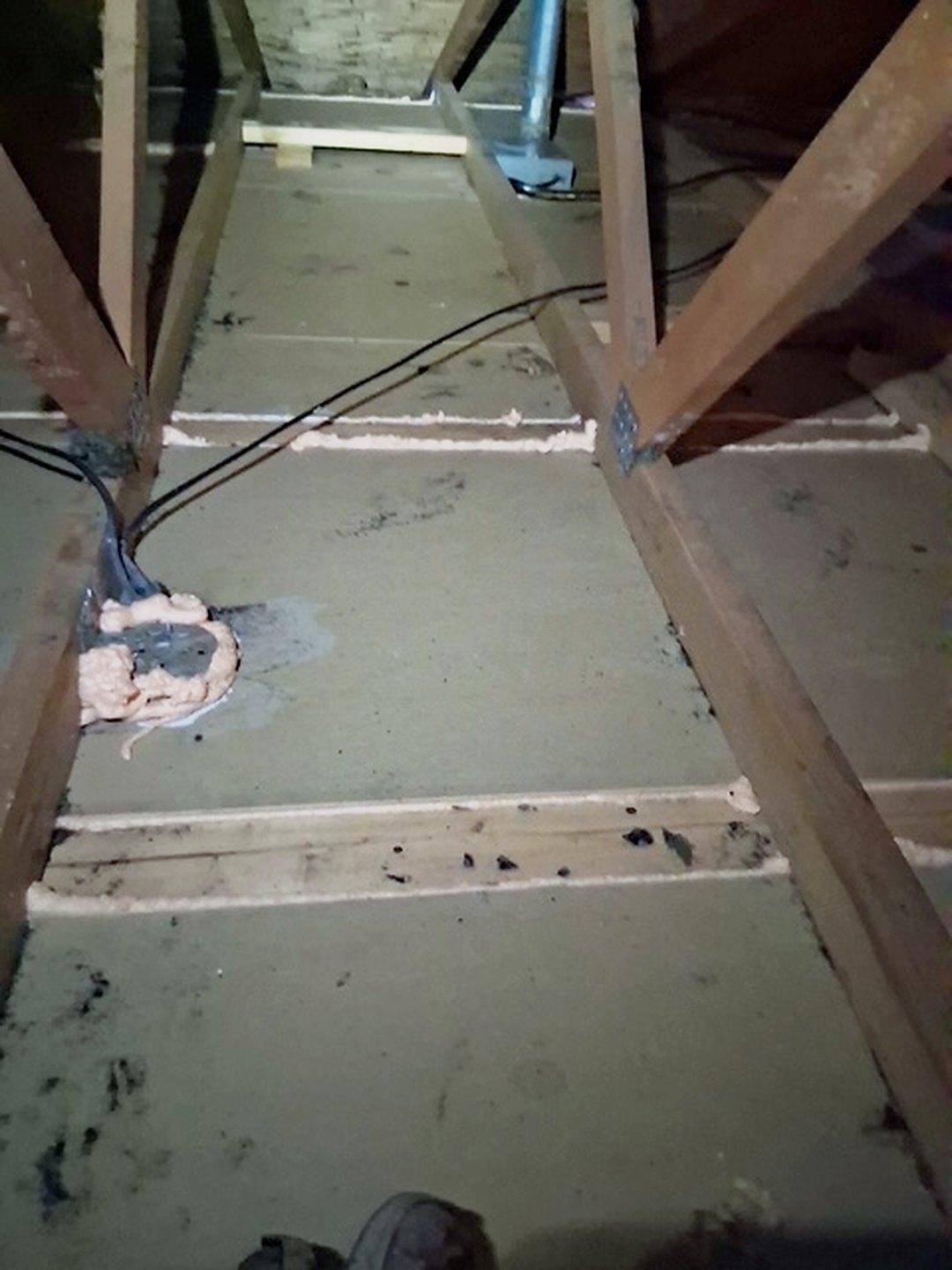
- Visible air leaks at top plates, can lights, chases, attic hatches and plumbing stacks.
- Bathroom fan and dryer vents, to make sure they go outside, not into the attic.
- Attic ventilation and baffles at the eaves.
- Signs of moisture, pests or old contaminated insulation.
- Whether your home is likely to qualify for Xcel's attic and air sealing rebates.
How testing protects your rebate
The air sealing rebate depends on the test, so the before test has to happen before any sealing starts. We test first, seal the leaks that matter most, then test again when the sealing is done so you can see the drop yourself. Both numbers go into your rebate paperwork.
The attic rebate depends on R-value before and after, so we measure and photograph the existing insulation before we start and mark the final depth on rulers when we finish.